
Data integration
Connect operational sources and document how key fields, transformations, and ownership work.
Turn scattered business information into a dependable base for action.
Analytics and AI are only as useful as the information, definitions, and permissions behind them. We help teams connect data sources, establish practical models and reporting, and introduce AI-enabled analysis with clear controls over access, quality, and interpretation.
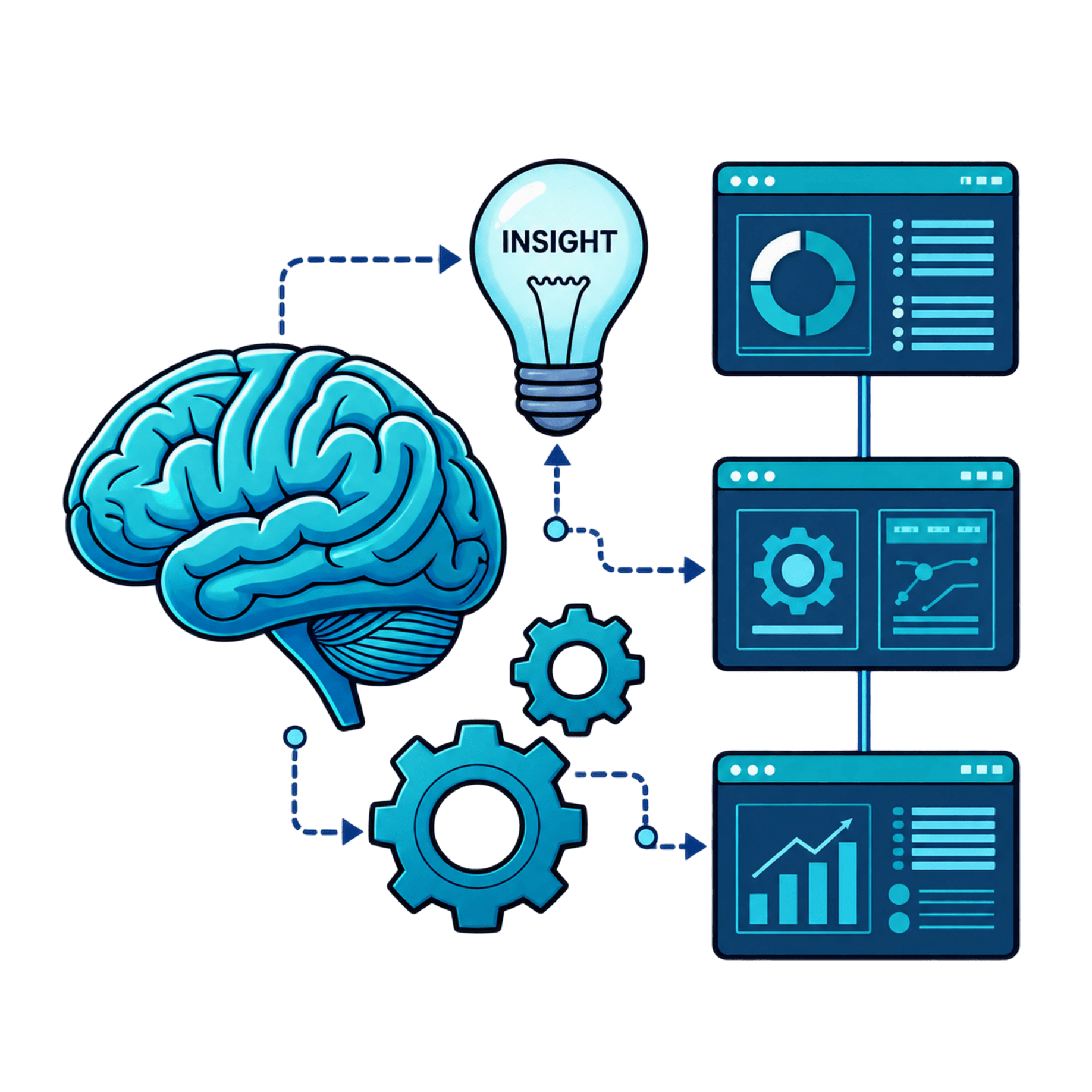
Start with the business question, then bring the right product, engineering, data, and delivery practices to solve it.
Connect operational sources and document how key fields, transformations, and ownership work.
Create dashboards and decision views that answer defined business questions rather than showing metrics without context.
Set validation, access, lineage, retention, and stewardship practices appropriate to the data.
Build search, summaries, and analytical workflows on curated sources with permission-aware access.
These are common starting points. We shape scope and implementation to your existing systems, users, and operating requirements.
Bring core operational indicators into consistent views with documented definitions.
Connect product, supplier, sales, and stock records for more useful planning conversations.
Make approved content easier to discover and summarize without broadly exposing sensitive records.
We make assumptions visible early, review progress in useful increments, and plan for the people who will operate the solution after launch.
See how we workIdentify priority questions, data sources, and owners
Profile data quality and agree common definitions
Build secure pipelines and decision-focused views
Monitor freshness, quality, usage, and access
Yes. We first confirm how each source can be accessed, how records relate, and which system remains authoritative for each data domain.
Data access, minimization, retention, and audit requirements are considered in the design; the precise controls depend on the data and deployment environment.
Yes, where the source data, access model, evaluation plan, and review expectations are defined. We scope this carefully to avoid treating generated text as an unquestioned source of truth.
Tell us what your team is working through. An IntelliSense expert can help shape a practical starting point.